
La Partage in Different Roulette Versions: When Half of the Stake Is Returned
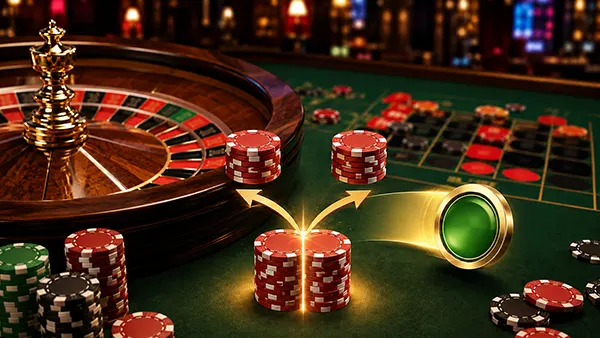
La Partage is one of the few roulette rules that directly changes what happens to a player’s stake when the ball lands on zero. Instead of taking the entire wager, the casino returns half of a qualifying even-money bet and keeps the other half. The rule is most closely associated with French roulette, although it can also appear at selected European single-zero tables and in certain live roulette games. Its importance is easy to understand: zero normally gives the casino its mathematical advantage on even-money bets, while La Partage reduces the financial effect of that result. The rule does not make roulette predictable and does not increase the probability of red, black, odd or even appearing. It simply changes the settlement of particular wagers after zero is the winning number.
How the La Partage Rule Works When the Ball Lands on Zero
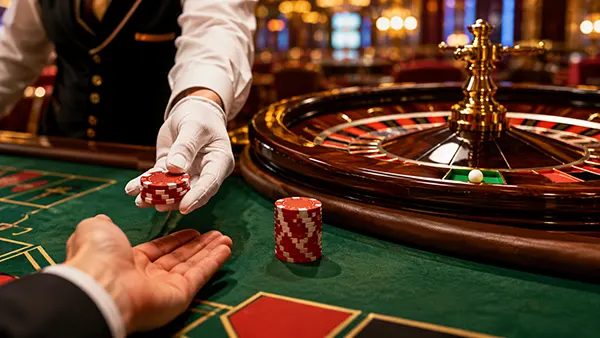
The phrase La Partage comes from French and refers to sharing or dividing. In roulette, that description is quite literal. Suppose a player places £20 on red at a table where La Partage applies. If a red number wins, the bet pays at the usual 1:1 rate. If a black number wins, the £20 stake is lost. If the ball stops on the green zero, however, the casino keeps £10 and returns the remaining £10 to the player’s balance or chip stack. There is no additional spin required to settle the wager, and the returned half is no longer committed to the table.
This treatment is different from normal single-zero roulette. A European wheel contains 37 pockets: numbers 1 to 36 plus zero. There are 18 red numbers and 18 black numbers, but zero belongs to neither group. The same principle applies to odd and even numbers and to the ranges 1–18 and 19–36. Without a special zero rule, a £20 red bet loses its full £20 when zero appears. With La Partage, the loss from that specific result falls to £10. That difference is small on one spin but meaningful when the theoretical cost of the wager is considered over many spins.
La Partage does not change the wheel, the sequence of numbers or the chance of zero appearing. On a single-zero wheel, zero still has a probability of 1 in 37 on each spin. What changes is the amount lost when that outcome occurs. For qualifying even-money bets, this reduces the theoretical house edge from approximately 2.70% to about 1.35%. Expressed as a theoretical return, the corresponding figure is approximately 98.65%. These percentages describe long-run mathematics rather than what an individual player should expect from a particular session, where results can vary substantially in either direction.
Which Roulette Bets Qualify for the Half-Stake Return
La Partage normally applies only to the three main groups of even-money outside bets: red or black, odd or even, and low or high. Low covers numbers 1–18, while high covers 19–36. On a traditional French layout, the same bets may be labelled Rouge and Noir, Pair and Impair, and Manque and Passe. Each covers 18 of the 36 non-zero numbers and normally pays 1:1. Because zero sits outside every one of these groups, it is the result that activates La Partage when the rule is available.
Other outside bets are not normally protected. A wager on the first, second or third dozen covers 12 numbers and pays 2:1, so zero results in a full loss. The same applies to column bets. Inside bets such as straight-up numbers, splits, streets, corners and six-lines also receive no half-stake return under standard La Partage rules. If £10 is placed directly on number 17 and zero wins, the £10 is lost in full. The presence of La Partage elsewhere on the table does not change the settlement of that number bet.
This distinction matters because descriptions such as “French roulette with La Partage” can create the impression that every wager receives more favourable treatment on zero. That is not the case. The reduced 1.35% house edge relates specifically to qualifying even-money wagers. Dozens, columns and ordinary inside bets on a 37-pocket wheel retain the usual theoretical house edge of about 2.70%. A player therefore needs to know both that La Partage is active and whether the particular bet being placed falls within the rule.
La Partage in French, European and American Roulette
French roulette is the version most strongly associated with La Partage. It normally uses the same basic 37-pocket single-zero wheel as European roulette, but its layout traditionally uses French betting terms and its rules may include La Partage or En Prison. At a French roulette table using La Partage, a zero result causes half of a qualifying even-money stake to be returned immediately. This combination of a single zero and the half-loss rule is why even-money bets can carry a theoretical house edge of approximately 1.35%, rather than the 2.70% found on an ordinary single-zero table without the rule.
European roulette also uses 37 pockets, but the label “European Roulette” does not automatically mean La Partage is available. Many European roulette games use standard rules under which zero causes red, black, odd, even, 1–18 and 19–36 bets to lose in full. Other versions specifically add La Partage. This means two games can use an identical wheel yet settle an even-money wager differently after zero. The game information or table rules therefore matter more than assumptions based only on the presence of a single zero.
Standard American roulette is different because its traditional wheel contains 38 pockets: numbers 1–36, zero and double zero. With normal rules, both green pockets cause ordinary red/black, odd/even and low/high bets to lose, producing a house edge of approximately 5.26%. La Partage is not a standard feature of American roulette. Some American tables instead use a related rule known as Surrender. Under Surrender, half of a qualifying even-money stake may be returned when either zero or double zero appears. On a double-zero wheel this cuts the house edge on those wagers from approximately 5.26% to 2.63%, but Surrender and La Partage should still be treated as separate named rules.
La Partage and En Prison Are Similar but Not Identical
French roulette may also offer En Prison, another special rule dealing with zero and even-money wagers. The immediate result is different from La Partage. Under La Partage, half the stake is returned and the wager is settled at once. Under the traditional En Prison procedure, the stake remains on the table after zero and is carried into the next spin. It is effectively held “in prison” while the next result determines whether the player can recover it.
For example, imagine £20 is placed on black and zero appears. With La Partage, £10 is returned and £10 is lost immediately. With En Prison, the £20 normally remains committed. If black appears on the following spin, the original £20 stake is released to the player without an additional £20 profit. If the relevant wager loses on the next spin, the stake is taken by the casino. Rules concerning another zero while a bet is imprisoned can differ between games, so the individual game’s instructions should be checked rather than assumed.
Both rules reduce the effect of zero on the applicable even-money bets, but the practical experience is different. La Partage produces an immediate, clearly defined half-loss. En Prison delays settlement and keeps the original stake exposed to another spin. Neither rule provides a way to predict future outcomes, and neither changes the independence of roulette spins. A run of black numbers does not make red more likely on the next spin, while repeated zero results remain possible even though they are statistically uncommon.
How La Partage Appears in Online and Live Roulette in 2026
By 2026, La Partage remains present in live and digital roulette, although availability depends on the individual game, software supplier, online casino and jurisdiction. Evolution continues to describe La Partage as part of its French Roulette rules, where a qualifying even-money bet loses only half its value when zero wins. Pragmatic Play has also incorporated the rule into live roulette products such as Privé Lounge Roulette and Privé Lounge Roulette Deluxe. These examples show that La Partage is not limited to traditional casino rooms or older versions of French roulette.
At the same time, players should not assume that every live table showing a single zero uses the rule. A standard live European Roulette game may settle zero in the ordinary way, taking the complete even-money stake. French Roulette is a stronger indication that a special zero rule may be present, but the precise conditions should still be confirmed. The most reliable information is normally found in the game rules, help section or paytable supplied with that specific roulette game. The wording should state directly what happens to red/black, odd/even and high/low bets when zero appears.
It is also worth checking whether a game has additional features that alter payouts or create separate bonus bets. Modern roulette includes multiplier games, speed versions and other modified formats alongside traditional tables. A game can use a European-style single-zero wheel without applying the standard 2.70% mathematics to every optional wager. La Partage should therefore be assessed only in relation to the bets specifically covered by its rules. Side bets, multipliers or bonus features can have their own probabilities and should not be assumed to receive a half-stake return simply because the main roulette game mentions La Partage.
What La Partage Means for Bankroll Management and Expected Loss
The easiest way to understand the financial difference is to compare identical even-money wagers. If a player repeatedly stakes £10 on red at ordinary European roulette, the theoretical house edge is about 2.70%, equivalent to an average theoretical loss of roughly 27p for every £10 wagered over a very large number of bets. At a single-zero table where La Partage applies to the same red wager, the theoretical edge falls to about 1.35%, corresponding to roughly 13.5p per £10 wagered over the long run. These are mathematical averages rather than predictions for one spin, ten spins or a single evening of play.
The reduced edge does not turn roulette into a game with a player advantage. Every normal wager still has a negative mathematical expectation over time. Betting systems based on increasing the stake after a loss, alternating colours or following recent results do not remove that underlying edge. La Partage simply makes qualifying even-money bets less costly mathematically than they would be under otherwise identical single-zero rules without the half-stake provision. The amount staked and the number of spins still have a much larger practical effect on how quickly a bankroll can rise or fall during a session.
For that reason, La Partage is most useful as a rule to understand when comparing roulette tables, rather than as a reason to increase stakes. Before playing, it is sensible to confirm the number of zero pockets, identify whether La Partage, En Prison or Surrender is actually stated in the rules, and check exactly which bets qualify. Setting a fixed gambling budget and treating it as entertainment expenditure keeps the reduced house edge in perspective. Receiving half a stake back after zero is preferable to losing the whole qualifying wager, but the result of every spin remains random and losses are always possible.
-
 Dwarf & Dragon Slot Game Review
The Dwarf & Dragon slot game, developed by an innovative …
-
 Jacks or Better Video Poker Game
Avid gamblers and casual players alike revel in the allure …
-
 Don Juan Peppers by Evoplay — A Festive Me...
Evoplay has introduced a colourful slot called Don Juan Peppers, …
-
 Reactoonz (Play’n GO) in 2026: avalanches,...
Reactoonz is one of those slots that feels simple until …